



Why GSM Is Becoming Fashion's New Flex
A few years ago, a "premium" hoodie meant a recognizable logo. Increasingly, it means a number most people had never heard of.
A few years ago, a "premium" hoodie meant a recognizable logo. Increasingly, it means a number most people had never heard of: GSM.
Grams per square meter, the standard measure of how much a knit or woven fabric weighs relative to its size, is quietly becoming the spec sheet shoppers actually care about — and it's worth understanding why.
What GSM actually measures
GSM is a direct proxy for density: more fiber packed into the same area means a fabric that holds its shape, insulates better, and wears down more slowly. Most everyday hoodies fall between 180 and 320 GSM. Heavyweight, investment-grade French terry typically starts above 400 GSM.
Why the market is shifting toward heavier fabric
The loungewear category isn't shrinking — it's projected to grow from roughly $12.9 billion in 2024 to $32.6 billion by 2033, which means competition for attention in "elevated basics" is only going to intensify. As that competition grows, brands and shoppers alike are looking for signals of quality that go beyond branding. Fabric weight is quantifiable, comparable across brands, and hard to fake, which is exactly why it's becoming the metric people reach for.
At the same time, organic cotton and recycled polyester are steadily displacing synthetic-first loungewear fabrics, as shoppers pay closer attention to what a garment is actually made of, not just how it's marketed.
A logo can be licensed or copied. A fabric spec has to be paid for, sourced, and manufactured.
Why this matters more than a trend cycle
Unlike a color or silhouette trend, a shift toward heavier, denser, more traceable fabric is really a shift in what "quality" means to the person buying. A fabric spec is a more durable signal of what a brand actually prioritizes than a logo ever was.
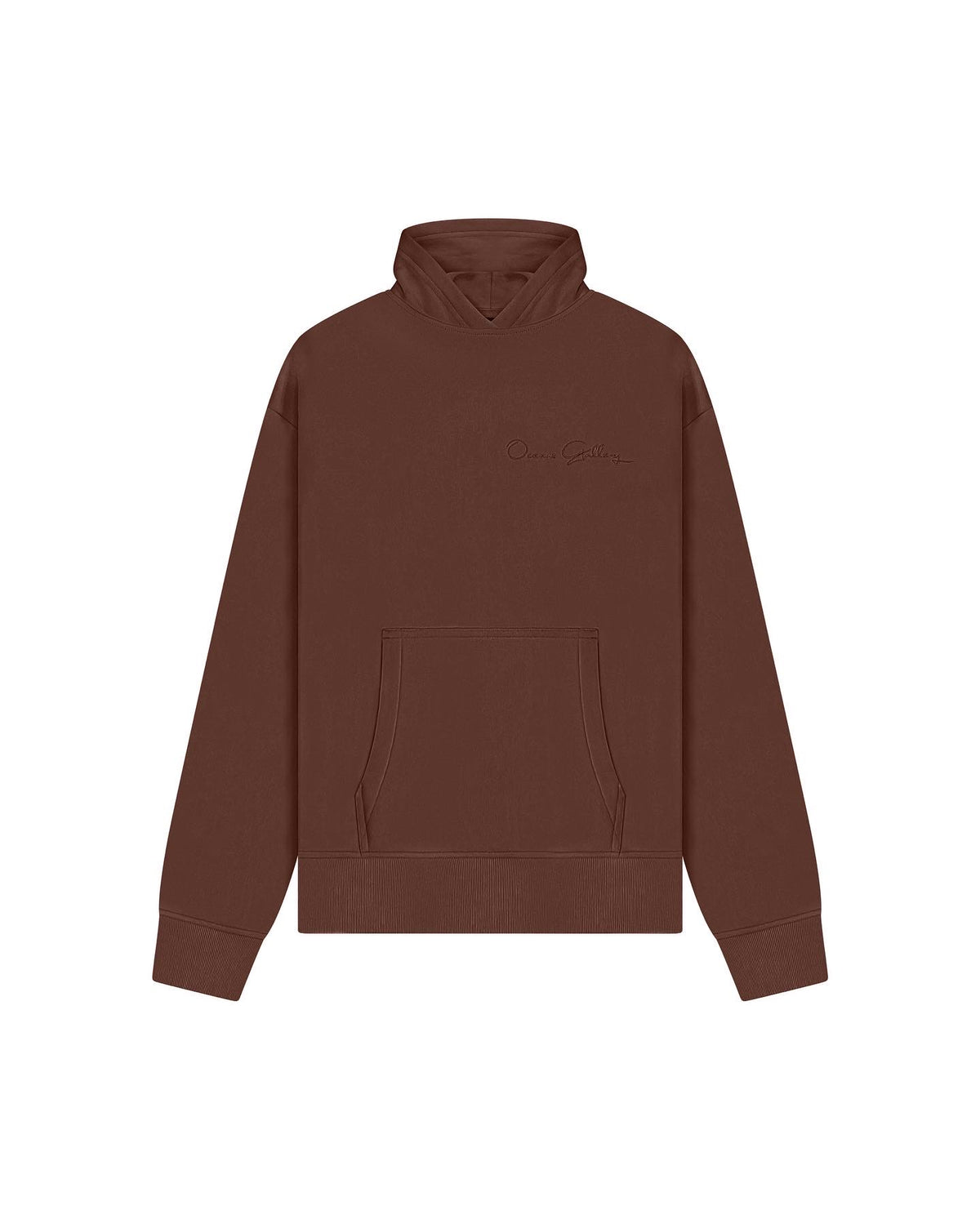
We built our own French Terry hoodie at 460 GSM, nearly double the weight of a typical hoodie, for the same reason this trend exists in the first place: heavier, denser fabric is the difference between a piece that holds its shape for one season and one that holds it for years.
For context on scale: the loungewear market is projected to grow from roughly $12.9 billion in 2024 to $32.6 billion by 2033. This isn't a fading trend — it's a category getting more competitive, which is exactly why quantifiable signals like fabric weight are replacing logos as the thing worth comparing.
Quick FAQ
Is higher GSM always better?
Not universally — GSM should match the garment's purpose. A lightweight cotton jersey t-shirt at 140-200 GSM is appropriate for breathability; a hoodie or sweatpant benefits from sitting well above 400 GSM for structure and longevity.
Why don't more brands advertise their GSM?
Because a low number invites comparison. Brands using lightweight, lower-cost fabric generally have less incentive to put a specific figure on the label.
Does heavier fabric mean a garment is automatically more sustainable?
Not by itself — durability is one factor in a garment's overall footprint, alongside the fiber source (organic vs. conventional cotton, virgin vs. recycled polyester) and how it's manufactured.


