



12 Things Well-Dressed People Know That No One Puts in a Style Guide
Not fit tips. Not color theory. Eleven rules that come from how fabric actually behaves — for men and women both.
Most style guides give you the same handful of things: fit matters, invest in basics, know your colors, tailoring is everything. All true. None of it new.
The real differences show up in fabric behavior — how a garment moves, ages, and holds itself the moment you put weight into it. Nobody writes about that, because most people styling clothes have never made any.
GSM should change how you size a garment — not just how heavy it feels
At 460gsm, a French Terry hoodie has enough body to hold an oversized cut without collapsing into shapelessness — the fabric does the structural work a lighter knit needs interfacing to fake. Below 300gsm, that same oversized fit just reads as too big. The rule: the heavier the GSM, the more room the cut can take before it stops looking intentional. Size up on heavyweight pieces. Never on light ones.
Chrome hardware sets your metal tone for the whole outfit
Most people choose a watch, then try to match a belt buckle to it. Backwards. Hardware sewn into a garment isn't optional the way an accessory is — it's already decided. Once a piece is built with chrome-engraved hardware, every other metal on your body needs to read chrome-adjacent. A gold watch against chrome hardware doesn't clash loudly. It just quietly reads as an afterthought.
Never pair two structured pieces — or two relaxed ones
This is the real proportion rule, and it's about behavior under movement, not visual balance. A structured cotton twill holds its shape regardless of how your body moves under it. A relaxed knit moves with you. Two structured pieces together and the outfit fights your own posture. Two relaxed pieces and there's no line left at all. One structured, one relaxed. Every time.
Wash frequency is a styling decision, not just a care one
Every wash relaxes fiber structure. A garment washed less holds its original drape longer — which means the silhouette you fell for in the store lasts longer too. If you love how something fits today, washing it less is the only way to keep that exact fit for longer.
The dryer fades clothes differently than the wash does — and it's often the bigger culprit
Hot water washing strips dye directly out of the fiber — that's chemical fade. The dryer works differently: heat and constant tumbling create fiber-on-fiber abrasion that roughens the fabric surface, and a roughened surface reflects light unevenly, which reads as faded color even when the dye itself is largely intact. The practical result is the same either way — dull, tired-looking fabric — but the dryer gets there through mechanical wear, not dye loss, and it's usually the faster of the two. A dark garment that's never seen hot water can still look faded within a few tumble cycles.
Diagonal weave wants a front break — flat knit doesn't
Cotton twill's diagonal wale creates a visible grain that reads intentional when it falls with a slight break at the hem — the same soft stack tailors use on dress trousers. Jersey has no grain to show off, so the same break just reads as too long. Twill: let it stack. Jersey: hem it clean. The weave decides, not the trend.
The heavier the fabric, the fewer accessories it can carry
A heavyweight garment already reads as considered — the weight communicates intention before a single accessory is added. Layering jewelry and a bag onto something already structurally heavy doesn't add polish, it adds competition. Dress down the accessories as the fabric weight goes up.
Velvet's sheen is directional — so is your best angle in it
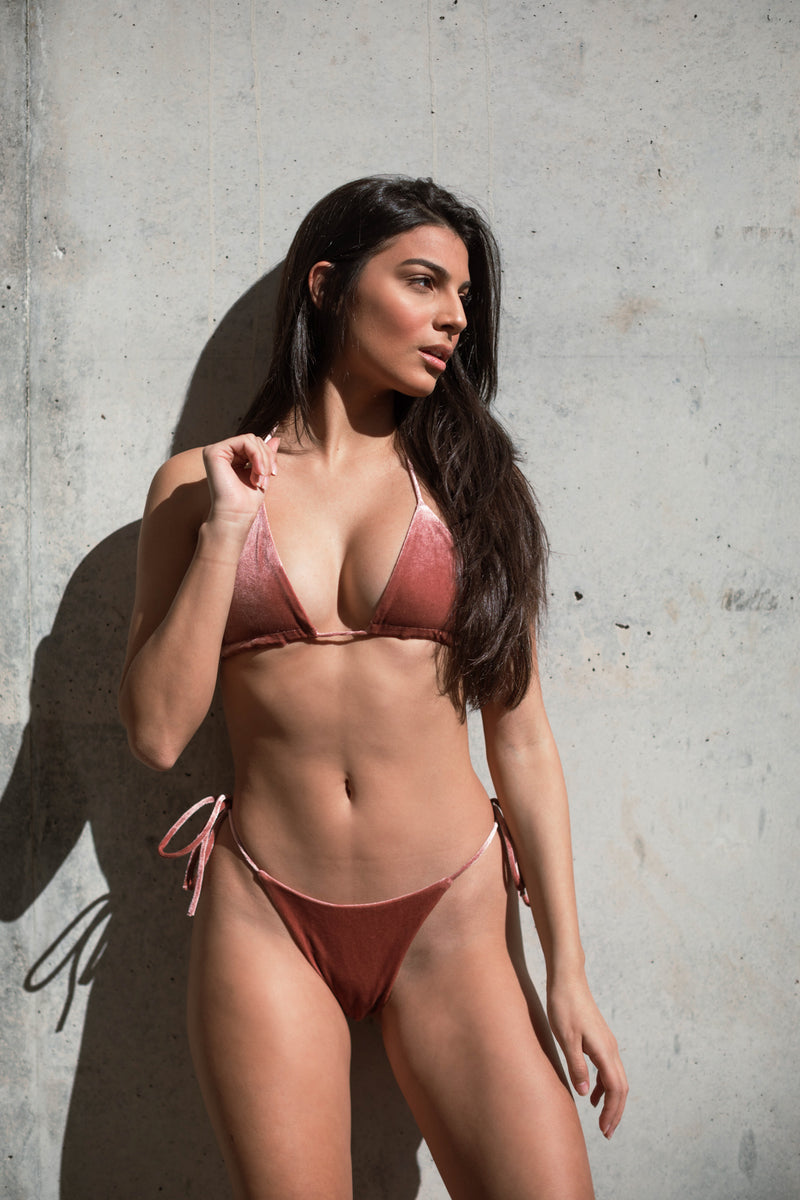
Velvet reflects light based on which way the pile is brushed, not just what light is hitting it — which is why the same piece can look flat in one photo and luminous in the next. If a velvet piece looks dull, the fix usually isn't the piece. It's turning slightly so the pile catches instead of absorbs.
Tie-up construction is engineered to move — stop fighting it
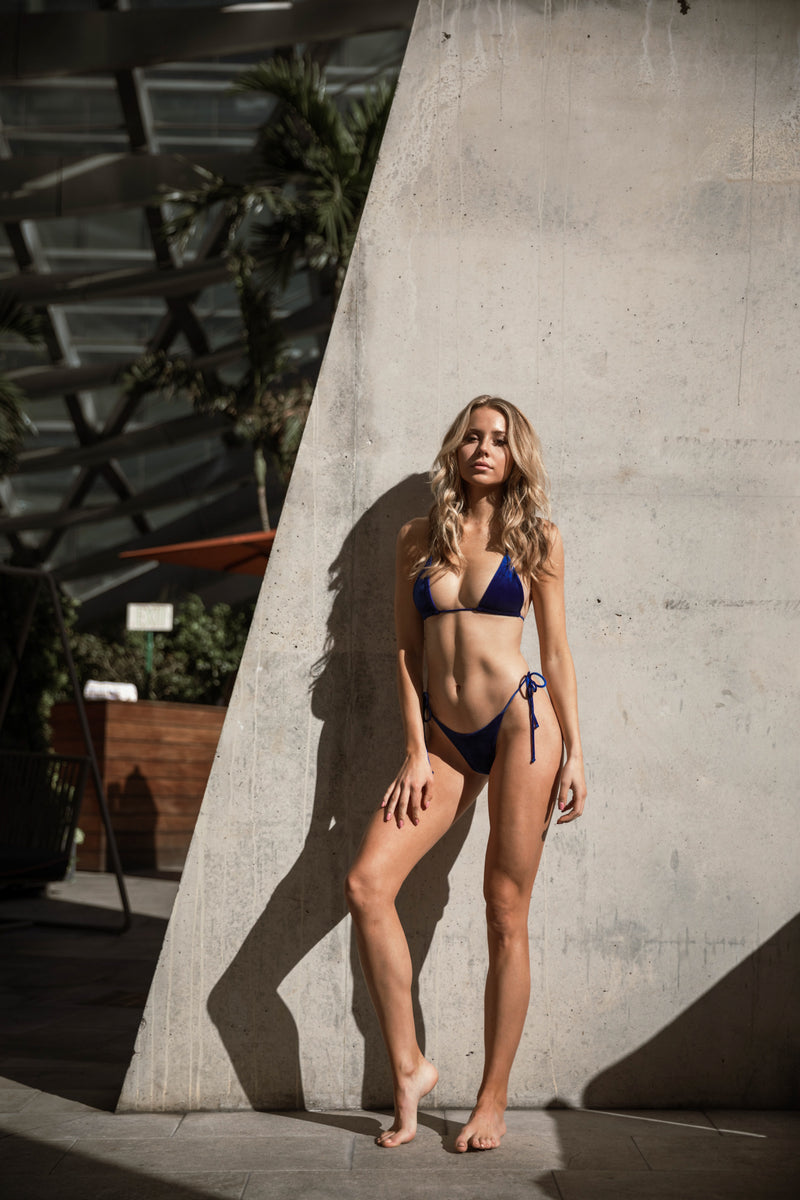
A tie-up top isn't a design compromise for a fixed style — it's a different engineering approach. Support comes from tension you control, not a built-in structure. It's supposed to shift slightly as you move; that's the mechanism working. Constantly readjusting a tie-up piece to sit perfectly still is fighting the actual design.
Cheeky-cut coverage is about rise — not the cut itself
The difference between a cheeky cut that flatters and one that doesn't rarely comes down to the cut — it's the rise, the height where the bottom sits against the hip. Higher rise elongates the leg line; the exact same cut sitting lower reads entirely differently. When a cut "doesn't work," what's usually not working is the rise.
"Runs small" is structural — not a vanity-sizing complaint
When a fitted piece is described as running small, it's rarely brand vanity sizing. Stretch fabrics are cut with negative ease on purpose — smaller than the body, so the fabric's recovery does the holding. Sizing up isn't compensating for an error. It's matching the garment's engineering to the support you want.
Fully lined pieces move as one layer — unlined pieces move as two
A fully lined garment — top and lining sewn as a single unit — moves as one piece against the body, which is why it photographs cleanly in motion. An unlined piece has two layers moving independently, which is what causes the shifting people usually blame on fit. Check the lining before assuming it's the wrong size.
The pattern across all twelve
None of these are outfit formulas. They're facts about how fabric actually behaves — weight, weave, construction, heat, lining — and once you know them, they explain almost every styling frustration that "just buy better basics" advice never quite addresses. Fit guides tell you what to buy. This is what to understand once you already have it on.


